
ESG compliance in the Netherlands: a practical starting point for SMEs
Updated: Mar 12
If you run a small or medium-sized business, work in a co-working space, or supply goods and services in the Netherlands, you might have heard about ESG compliance. It’s becoming a key part of how companies operate and report their environmental, social, and governance impacts. But what does it really mean for you? How do you start, and what steps should you take to stay on track?
In this post, we will walk you through the essentials of ESG compliance in the Netherlands. Our model is to keep things simple and practical, so you can take action without feeling overwhelmed. Let’s dive in.
Understanding ESG Compliance Basics
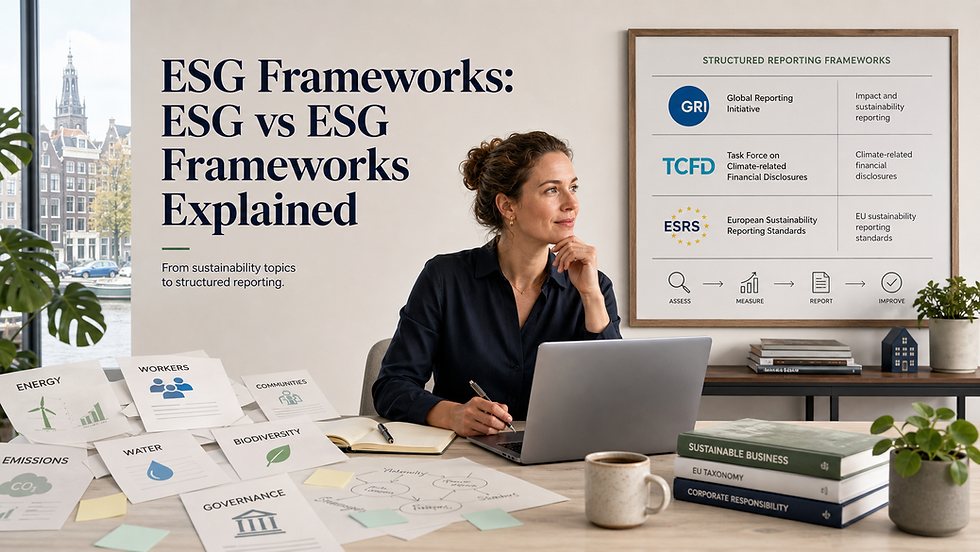
ESG stands for Environmental, Social, and Governance. These three pillars help businesses measure and manage their impact beyond just profits. Here’s a quick breakdown:
Environmental: How your business affects the planet. Think energy use, waste, emissions, and resource management.
Social: How you treat people. This includes employee welfare, community engagement, diversity, and customer relations.
Governance: How your company is run. This covers transparency, ethics, leadership, and legal compliance.
ESG compliance means following rules and standards that require reporting on these areas. It’s not just about ticking boxes. It’s about showing you care and are responsible. This can improve your reputation, attract customers, and even open doors to new funding.
Why ESG Compliance Matters for Your Business
You might wonder why you should bother with ESG. Here are some reasons:
Legal requirements: The Netherlands is tightening its sustainability reporting rules. You want to stay ahead.
Investor interest: More investors look for companies with strong ESG records.
Customer demand: People prefer brands that act responsibly.
Operational efficiency: ESG can help you save costs by reducing waste and energy use.
Risk management: It enables you to spot and manage risks related to climate change, social issues, or governance failures.
Starting with ESG compliance can feel like a big task. But breaking it down into steps makes it manageable.

How to Start Your ESG Compliance Journey
Here’s a simple plan to get you going:
1. Assess Your Current Situation
Assess your business and determine your position on environmental, social, and governance issues. Ask yourself:
How much energy and water do we use?
What waste do we produce, and how do we handle it?
How do we treat our employees and customers?
Do we have clear policies on ethics and transparency?
You can use checklists or simple surveys to gather this info.
2. Set Clear Goals
Based on your assessment, decide what you want to improve. Make your goals specific and realistic. For example:
Reduce electricity use by 10% in one year.
Increase employee training on diversity and inclusion.
Publish an annual report on governance practices.
3. Develop an Action Plan
Create a step-by-step plan to reach your goals. Assign responsibilities and deadlines. Some actions might include:
Installing energy-efficient lighting.
Offering flexible work options.
Reviewing supplier contracts for ethical standards.
4. Collect Data and Monitor Progress
Keep track of your efforts and results. Use simple tools like spreadsheets or specialised software. Regular monitoring helps you stay on course and adjust if needed.
5. Report Your Findings
Transparency is key. Share your progress with stakeholders, whether through a formal report or updates on your website. This builds trust and shows commitment.
6. Keep Learning and Improving
ESG is an ongoing journey. Stay informed about new regulations and best practices. Engage with experts or join networks to exchange ideas.
What is the CSRD Regulation in the Netherlands?
The Corporate Sustainability Reporting Directive (CSRD) is a new EU regulation that affects many businesses in the Netherlands. It expands the scope of sustainability reporting rules and makes them more detailed and mandatory.
Here’s what you need to know:
Who is affected? Larger companies and some SMEs that meet certain criteria.
What must be reported? Detailed information on environmental impact, social responsibility, and governance practices.
When does it start? The rules begin to apply gradually from 2024 onwards.
Why is it important? It ensures companies provide reliable and comparable ESG data.
If your business falls under CSRD, you’ll need to prepare for more thorough reporting. This means collecting accurate data and, if necessary, adjusting your processes.
Even if you’re not directly affected yet, understanding CSRD helps you plan ahead and improve your ESG practices.

Practical Tips for Managing ESG Compliance in Your Business
Here are some actionable tips to make ESG compliance easier:
Start small: Focus on a few key areas first, then expand.
Engage your team: Involve employees in setting goals and finding solutions.
Use technology: Tools like Greennect can simplify data collection and reporting.
Collaborate with partners: Work with suppliers and customers to improve ESG across your value chain.
Train regularly: Keep your team up to date on ESG topics and compliance requirements.
Document everything: Keep clear records of your policies, actions, and results.
Seek expert advice: Don’t hesitate to get help from consultants or industry groups.
By following these tips, you’ll build a strong foundation for ESG compliance that supports your business goals.
Moving Forward with Confidence
ESG compliance is not just a legal obligation. It’s an opportunity to make your business more sustainable, responsible, and competitive. By understanding the basics and taking practical steps, you can navigate this landscape with confidence.
Remember, you don’t have to do it alone. Tools and partners are available to help you every step of the way. For example, Netherlands ESG compliance solutions can guide you through reporting and creating greener workplaces.
Start today by assessing your current impact, setting clear goals, and building a plan. Your efforts will pay off in a stronger business and a healthier planet.


Comments