
Why ESG trends matter in 2026 for SMEs

Many Dutch SME leaders assume that new ESG rules only affect multinational corporations, yet 2026 brings regulatory changes that directly affect medium and small enterprises. The Corporate Sustainability Reporting Directive and Corporate Sustainability Due Diligence Directive now extend obligations to thousands of Dutch businesses previously exempt from formal sustainability reporting. Understanding these shifts helps you avoid penalties, capture cost savings, and position your organisation strategically.
Table of Contents
Key takeaways
Point | What It Means in Practice |
CSRD expands reporting | The CSRD applies to companies meeting size thresholds starting in 2026, bringing many SMEs into scope. |
CSDDD demands due diligence | Companies must identify risks across their supply chains related to human rights and environmental impacts. |
Omnibus reduces some burdens | Fewer climate-critical firms face reporting, but complexity increases for those remaining in scope. |
Tools enable compliance | Platforms like the Impact Compass help SMEs measure CO2, circularity, and social value efficiently. |
ESG drives opportunity | Beyond compliance, sustainability reporting unlocks cost savings, reputation gains, and competitive advantage. |
Understanding new ESG regulations shaping 2026 requirements
Three major regulatory frameworks define ESG obligations for Dutch SMEs this year. CSRD applies to larger companies and many SMEs meeting specific criteria starting in 2026, requiring detailed environmental, social, and governance disclosures. Your business falls under CSRD if you exceed two of three thresholds: more than 250 employees, €25 million in assets, or €50 million in turnover.
The Corporate Sustainability Due Diligence Directive takes a different angle. CSDDD requires companies to identify and mitigate adverse human rights and environmental impacts throughout their supply chains. This directive extends accountability beyond your direct operations to your sourcing, manufacturing, and distribution partners.
Recent adjustments add complexity. The Omnibus Proposal reduces the number of Dutch companies required to report ESG data in climate-critical sectors, yet increases scrutiny for those still obligated to do so. Understanding which regulations apply to your specific situation prevents costly missteps.
Regulation | Previous Framework | 2026 Framework | Affected Companies |
NFRD | Large public interest entities only | CSRD expands to SMEs meeting thresholds | 250+ employees or €25m assets or €50m turnover |
Supply Chain | Voluntary guidelines | CSDDD mandatory due diligence | Companies with a significant supply chain footprint |
Reporting Scope | Broad requirements | Omnibus refines thresholds | Adjusted for climate-critical sectors |
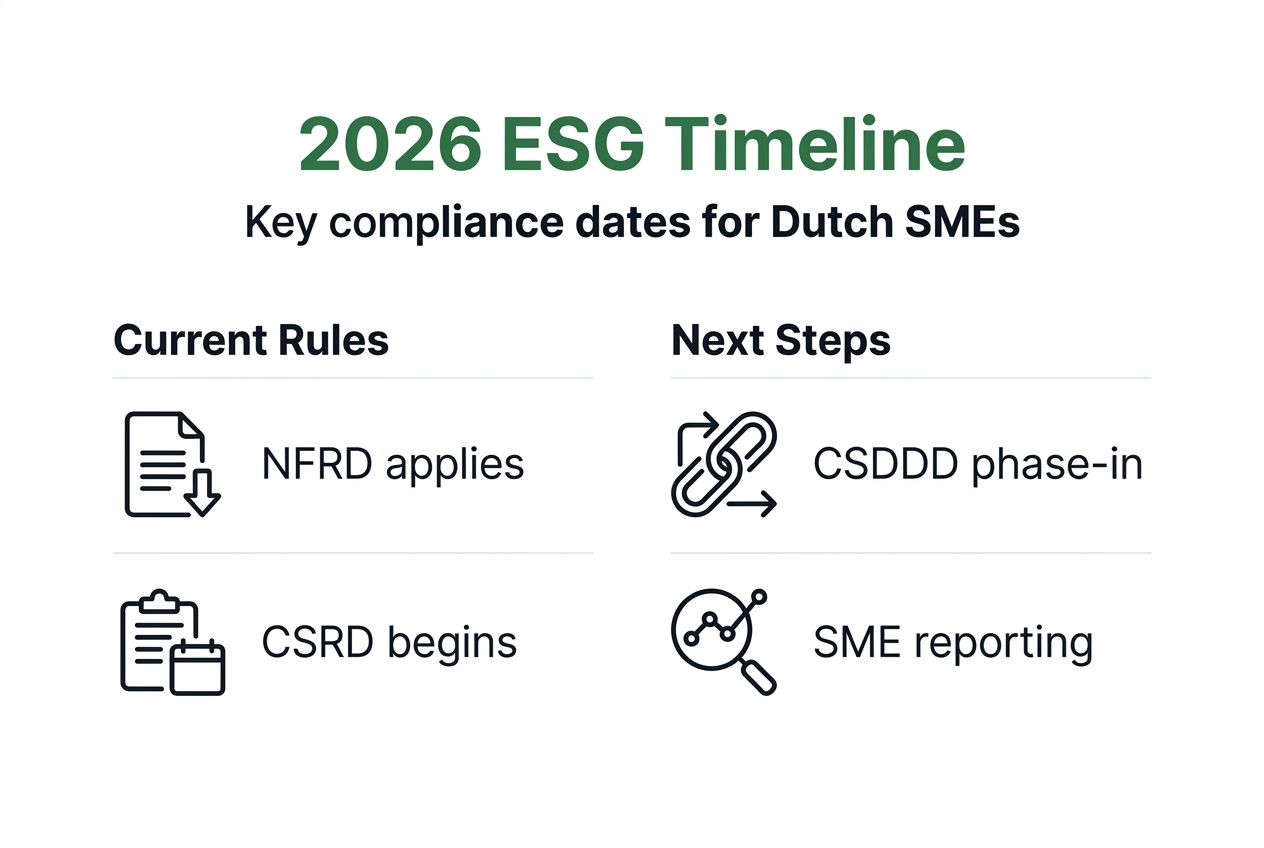
Key compliance dates shape your preparation timeline. Companies already subject to the Non-Financial Reporting Directive must comply with the CSRD starting in January 2026. Large undertakings not previously covered follow in 2027, with listed SMEs required to report from 2028 unless they opt for a two-year deferral.
Pro Tip: Start understanding CSRD regulations now, even if your compliance date is 2027 or 2028, as data collection and system setup require 12 to 18 months.
Most SMEs need baseline assessments first. Evaluate your current emissions, workforce diversity, governance structure, and supply chain risks before formal reporting begins. Early preparation reduces stress and costs when deadlines approach. The Dutch ESG regulations overview provides detailed thresholds and sector-specific guidance.
Why these ESG trends matter for Dutch SMEs’ sustainability and risk management
Regulatory compliance represents just one dimension of ESG relevance. Forward-thinking SMEs recognise sustainability reporting as a strategic infrastructure that delivers multiple business advantages. Anticipating regulatory risks helps you avoid penalties that can reach significant percentages of annual turnover under CSDDD enforcement mechanisms.
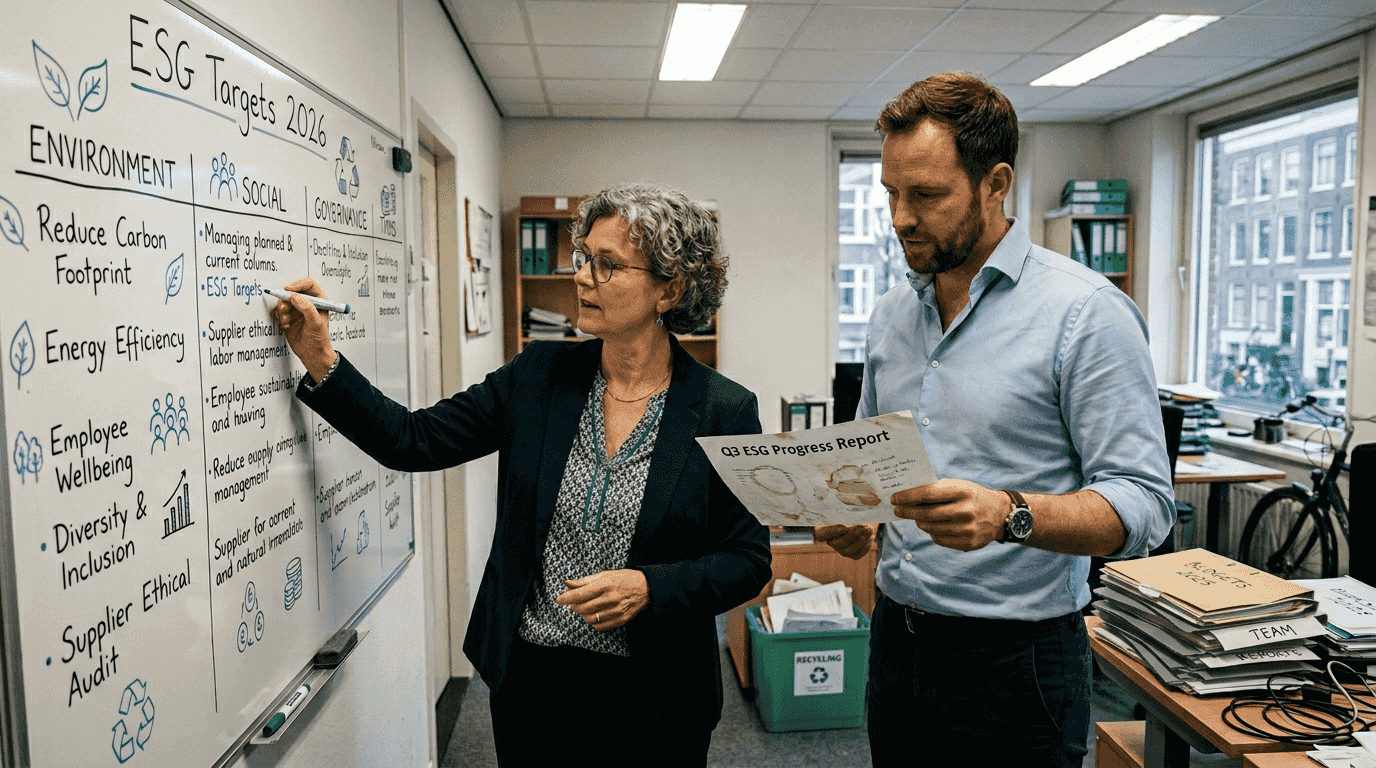
Reputation benefits extend beyond compliance boxes. Customers increasingly favour suppliers demonstrating verified sustainability credentials. Investors screening portfolios for ESG performance direct capital towards companies with transparent reporting. Your ability to provide credible data opens doors previously closed to smaller organisations.
Cost savings emerge from systematic ESG management. Energy efficiency initiatives reduce utility bills whilst lowering Scope 1 and 2 emissions. Waste reduction programmes reduce disposal and material costs. Water conservation measures decrease operational overhead. These tangible financial benefits compound over time, improving margins and competitiveness.
SMEs face challenges due to lack of knowledge and tools, making ESG compliance feel burdensome.
Transparency builds trust with all stakeholders. Detailed ESG reporting demonstrates accountability to employees, customers, suppliers, and communities. This openness fosters loyalty, attracts talent, and strengthens partnerships. Many procurement managers now require sustainability documentation before awarding contracts, making ESG credentials a commercial necessity.
The European context amplifies these pressures. The European Green Deal aims for climate neutrality by 2050, influencing ESG agendas of all EU companies through cascading regulatory requirements and market expectations. Dutch SMEs operating in European supply chains must align with this trajectory or risk exclusion.
Practical challenges exist. Resource constraints, limited expertise, and complex measurement methodologies create barriers for smaller organisations. Yet emerging tools and services specifically address SME needs, making robust ESG management increasingly accessible. Explore empowering SMEs with ESG solutions for practical implementation guidance.
Pro Tip: Engage employees, customers, and suppliers early in your ESG journey to identify shared priorities, gather baseline data, and build collaborative improvement initiatives that reduce compliance workload.
The breedweer impact compass tool demonstrates how targeted technology helps SMEs overcome knowledge gaps and measurement challenges. Start exploring ESG basics to build a foundational understanding across your team.
How SMEs can respond to ESG trends: practical steps and tools for 2026 compliance
Systematic preparation transforms daunting regulatory requirements into manageable projects. Follow these steps to build compliant, effective ESG programmes:
Assess your current ESG status across environmental, social, and governance dimensions to establish baselines.
Map risks and opportunities specific to your industry, location, and supply chain structure.
Collect data systematically using standardised frameworks aligned with CSRD requirements.
Adopt measurement tools that automate calculations and track progress over time.
Report transparently using formats accessible to investors, customers, and regulatory bodies.
Emissions measurement requires understanding three scopes. Scope 1 covers direct emissions from owned sources, such as company vehicles and heating systems. Scope 2 includes indirect emissions from purchased electricity, heat, or cooling. Scope 3 encompasses all other indirect emissions in your value chain, from supplier manufacturing to customer use of the product.
The Impact Compass helps SMEs measure CO2 emissions, circularity, diversity, and social value to comply effectively. This platform simplifies complex calculations and generates reports meeting regulatory standards. Similar tools cater to organisations of different sizes and sectors.
ESG Metric | Description | Relevance for SMEs |
Carbon footprint | Total greenhouse gas emissions across scopes | Required under CSRD, impacts climate strategy |
Waste diversion rate | Percentage of waste recycled or reused | Demonstrates circular economy commitment |
Employee diversity | Gender, age, and background representation | Social pillar compliance and talent attraction |
Governance structure | Board composition, ethics policies | Transparency and accountability demonstration |
Supply chain audits | Verification of supplier sustainability | CSDDD due diligence requirement |
Procurement practices present specific opportunities. Transparent procurement, aligned with the Dutch Public Procurement Act, encourages a sustainability focus beyond the lowest price. Evaluate suppliers on environmental performance, fair labour practices, and community impact alongside traditional cost and quality criteria.
Data quality matters enormously. Invest in systems capturing accurate, verifiable information from the start rather than retrofitting estimates later. Automated integrations with utility providers, transport systems, and operational software reduce manual entry errors and administrative burden.
Pro Tip: Shift your procurement evaluation criteria to weight social and environmental value at 30% to 40%, alongside price and quality, to drive supplier sustainability whilst meeting regulatory expectations.
Implementation timelines vary by organisational complexity. Simple operations might complete baseline assessments in three months, whilst multi-site businesses with complex supply chains need six to nine months. Allocate sufficient time and resources to avoid rushed, incomplete reporting.
Explore sustainability reporting trends for emerging best practices. Review ESG reporting metrics to select indicators most relevant to your sector. The impact compass for SMEs demonstrates practical applications of technology. Build expertise through reporting evidence resources.
Future outlook: evolving ESG trends and opportunities beyond compliance
Regulatory compliance is foundational, but strategic ESG management delivers far greater value. Forward-looking SMEs leverage sustainability as a competitive differentiator, an innovation catalyst, and a resilience builder. Market dynamics increasingly reward companies demonstrating genuine environmental and social commitment.
ESG focus is moving from compliance to being a strategic steering tool, delivering sustainable choices and cost savings. This evolution transforms sustainability from back-office reporting into a core business strategy, influencing product development, market positioning, and growth plans.
Innovation opportunities abound. Sustainable product design attracts environmentally conscious customers whilst reducing material costs. Service model innovations emphasising repair, reuse, and sharing create new revenue streams. Supply chain partnerships prioritising sustainability foster collaboration and shared value creation.
Several emerging trends will shape the next phase:
Artificial intelligence applications in ESG risk management and predictive analytics
Blockchain technology enables transparent, verifiable sustainability claims
Standardised data formats facilitating easier reporting and benchmarking
Social value procurement is becoming a standard practice across the public and private sectors
Integrated financial and sustainability reporting replaces separate documents
Regulatory evolution continues. The European Green Deal aims for a climate-neutral Europe by 2050, pushing continual ESG evolution through successive policy updates and enforcement mechanisms. Staying ahead of regulatory curves positions your organisation advantageously.
Proactive ESG adoption transforms compliance costs into strategic investments that drive long-term value creation and organisational resilience.
Competitive advantage accrues to early movers. Companies establishing robust ESG systems now capture market share from slower competitors as customer preferences and investor criteria shift. Talent acquisition benefits as skilled workers preferentially join organisations aligned with their values.
Long-term resilience depends on sustainability integration. Climate risks, resource scarcity, and social pressures will intensify over the coming decades. Organisations that build adaptive capacity through systematic ESG management weather disruptions more effectively than those that treat sustainability as a peripheral concern.
Start viewing ESG as a business opportunity rather than a regulatory burden. The transition requires mindset shifts, capability building, and systematic implementation, yet delivers returns exceeding initial investments. Explore the basics of ESG compliance to build foundational knowledge. Investigate green workplace initiatives for practical improvement ideas. Review strategic ESG benefits through real implementation cases.
How Greennect supports your SME in navigating ESG trends
Navigating 2026 ESG requirements feels overwhelming for resource-constrained SMEs. Greennect specialises in helping small teams and co-working spaces track basic ESG data, improve daily workplace practices, and respond to growing sustainability requests.
Our platform delivers structure and results without lengthy reports. We understand Dutch SMEs face unique challenges in meeting CSRD and CSDDD requirements within realistic budgets and timelines. Tailored tools match your specific size, sector, and compliance thresholds.
Expert guidance saves time and reduces risk. Our team helps you collect accurate data, implement measurement systems, and generate compliant reports efficiently. Pro Tip: Using specialist ESG support typically costs less than hiring additional staff whilst delivering superior technical expertise and regulatory knowledge.
Explore Greennect ESG reporting solutions designed for practical, cost-effective compliance. Discover what Greennect offers across reporting, measurement, and improvement services. Access comprehensive resources through our Greennect knowledge centre to build internal capability alongside external support.
FAQ: ESG Trends 2026
What is ESG, and why is it increasingly important for SMEs in 2026?
ESG stands for environmental, social, and governance factors, measuring organisational sustainability and ethical impact. Regulatory expansion under the CSRD and CSDDD brings thousands of Dutch SMEs into the mandatory reporting scope starting in 2026, whilst customers and investors increasingly demand verified sustainability credentials.
Which ESG regulations must Dutch SMEs comply with this year?
The Corporate Sustainability Reporting Directive applies to companies that exceed two of the three thresholds: 250 employees, €25 million in assets, or €50 million in turnover. The Corporate Sustainability Due Diligence Directive requires supply chain risk management for human rights and environmental impacts. Specific compliance dates vary by company size and listing status, with detailed guidance on understanding CSRD regulations.
How can SMEs measure their environmental and social impacts effectively?
Start with emissions calculations across three scopes, waste and water usage tracking, employee diversity metrics, and governance structure documentation. Platforms like the Impact Compass automate complex calculations and generate compliant reports. Baseline assessments typically require three to six months, depending on organisational complexity.
What are the benefits of ESG compliance beyond legal obligations?
Systematic ESG management delivers cost savings through energy efficiency and waste reduction, reputation benefits attracting customers and investors, competitive advantages in procurement processes, and talent acquisition improvements. Many SMEs recover compliance investments within two to three years through operational efficiencies and new business opportunities. Review the basics of ESG compliance for a comprehensive benefit analysis.
Where can SMEs find tools and support for ESG reporting and management?
Recommended


Comments